moral story for kids in englidh
Search Results

Top 20 Short Moral Stories for Children

In this Article
Last Updated on
There was a time when storybooks were the only means of entertainment for children. A decade or two ago, kids spent their time reading stories and role playing their favourite characters from the stories. However, times have changed now – in the age of the internet, kids spend most of their time playing games on smartphones or watching cartoons or videos on YouTube.
But if you want your kids to take a break from screens and experience your childhood, you can read short stories to them. By narrating stories to your kids, you will impart wisdom to them and also spend much-needed quality time with them. We have a collection of some popular short stories with moral values that you can read to your kids.
Also Read: Short Stories of Mahabharata for Kids with Moral Lessons
Video: Short Moral Stories for Kids – Part 1
Fun and Entertaining Short Moral Stories for Your Children
If you want to imbibe good habits in your kids from early on and watch them grow up to become good individuals, read moral stories to them. Here are 20 children’s stories with moral values that you can read to your kids!
1. The Lion and the Mouse
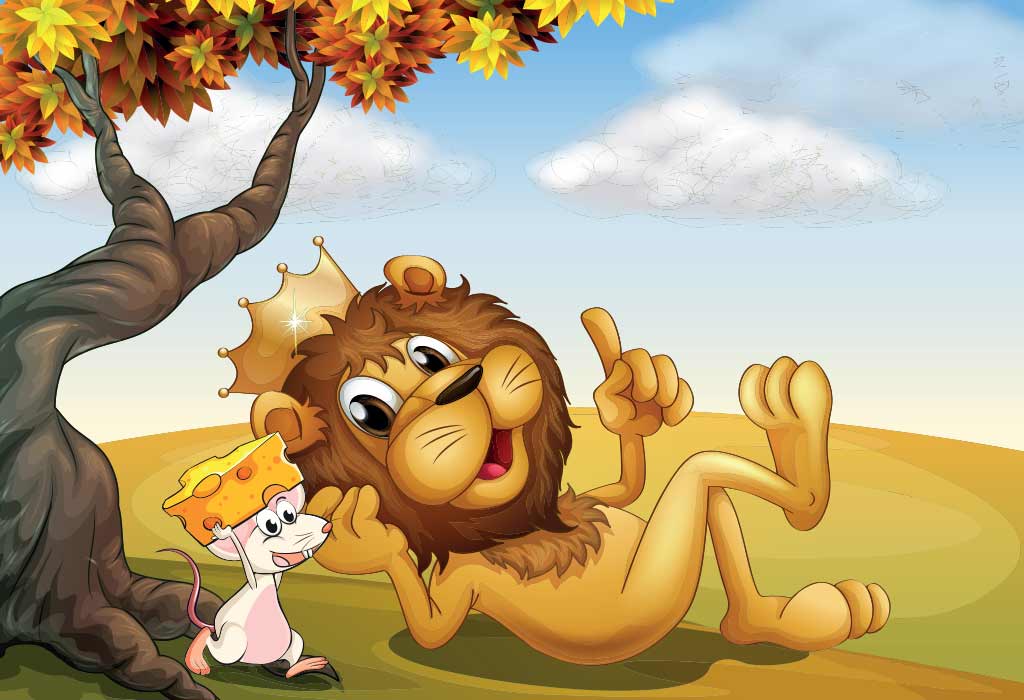
A lion was once sleeping in the jungle when a mouse started running up and down his body just for fun. This disturbed the lion’s sleep, and he woke up quite angry. He was about to eat the mouse when the mouse desperately requested the lion to set him free. “I promise you, I will be of great help to you someday if you save me.” The lion laughed at the mouse’s confidence and let him go.
One day, a few hunters came into the forest and took the lion with them. They tied him up against a tree. The lion was struggling to get out and started to whimper. Soon, the mouse walked past and noticed the lion in trouble. Quickly, he ran and gnawed on the ropes to set the lion free. Both of them sped off into the jungle.
Moral of the Story
A small act of kindness can go a long way.
Also Read: Childhood Stories of Lord Krishna for Kids
2. Count Wisely
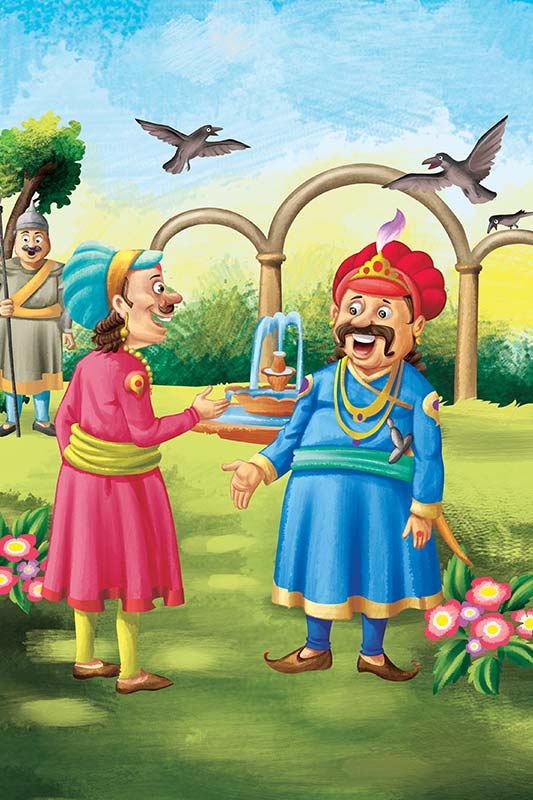
One day, king Akbar asked a question in his court that left everyone in the courtroom puzzled. As they all tried to figure out the answer, Birbal walked in and asked what the matter was. They repeated the question
The question was, “How many crows are there in the city?”
Birbal immediately smiled and went up to Akbar. He announced the answer; he said there were twenty-one thousand, five hundred and twenty-three crows in the city. When asked how he knew the answer, Birbal replied, “Ask your men to count the number of crows. If there are more, then the relatives of the crows must be visiting them from nearby cities. If there are fewer, then the crows from our city must be visiting their relatives who live outside the city.” Pleased with the answer, Akbar presented Birbal with a ruby and pearl chain.
Moral of the Story
Having an explanation for your answer is just as important as having an answer.
Also Read: Fascinating Ramayana Stories for Children
3. The Boy Who Cried Wolf
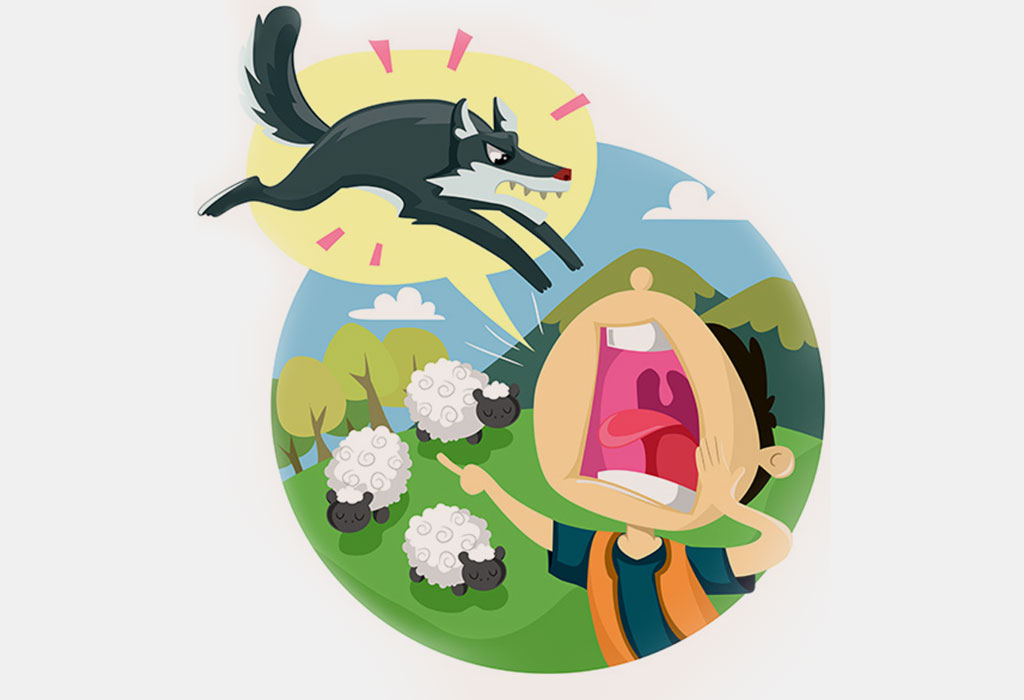
In a village, lived a carefree boy with his father. The boy’s father told him that he was old enough to watch over the sheep while they graze in the fields. Every day, he had to take the sheep to the grassy fields and watch them as they graze. However, the boy was unhappy and didn’t want to take the sheep to the fields. He wanted to run and play, not watch the boring sheep graze in the field. So, he decided to have some fun. He cried, “Wolf! Wolf!” until the entire village came running with stones to chase away the wolf before it could eat any of the sheep. When the villagers saw that there was no wolf, they left muttering under their breath about how the boy had wasted their time. The next day, the boy cried once more, “Wolf! Wolf!” and, again, the villagers rushed there to chase the wolf away.
The boy laughed at the fright he had caused. This time, the villagers left angrily. The third day, as the boy went up the small hill, he suddenly saw a wolf attacking his sheep. He cried as hard as he could, “Wolf! Wolf! Wolf!”, but not a single villager came to help him. The villagers thought that he was trying to fool them again and did not come to rescue him or his sheep. The little boy lost many sheep that day, all because of his foolishness.
Moral of the Story
It is difficult to trust people who lie, so it’s important to always be truthful.
4. The Fox and the Stork
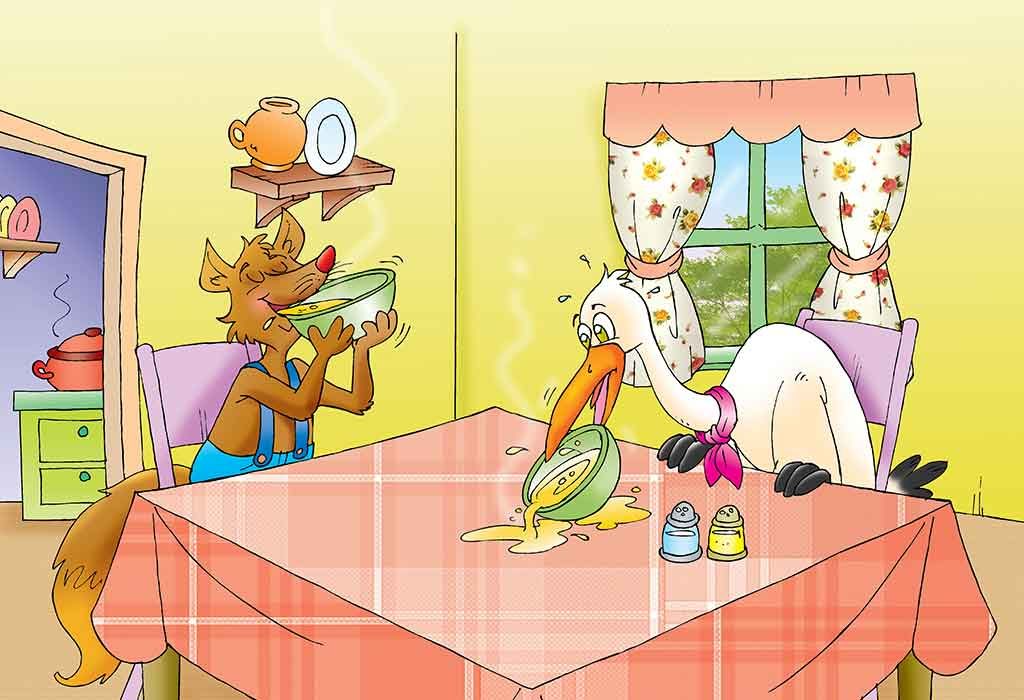
One day, a selfish fox invited a stork for dinner. Stork was very happy with the invitation – she reached the fox’s home on time and knocked at the door with her long beak. The fox took her to the dinner table and served some soup in shallow bowls for both of them. As the bowl was too shallow for the stork, she couldn’t have soup at all. But, the fox licked up his soup quickly.
The stork was angry and upset, but she didn’t show her anger and behaved politely. To teach a lesson to the fox, she then invited him for dinner the next day. She too served soup, but this time the soup was served in two tall narrow vases. The stork devoured the soup from her vase, but the fox couldn’t drink any of it because of his narrow neck. The fox realised his mistake and went home famished.
Moral of the Story
A selfish act backfires sooner or later!
Also Read: Indian Mythological Stories for Kids
5. The Golden Touch

Once there lived a greedy man in a small town. He was very rich, and he loved gold and all things fancy. But he loved his daughter more than anything. One day, he chanced upon a fairy. The fairy’s hair was caught in a few tree branches. He helped her out, but as his greediness took over, he realised that he had an opportunity to become richer by asking for a wish in return (by helping her out). The fairy granted him a wish. He said, “All that I touch should turn to gold.” And his wish was granted by the grateful fairy.
The greedy man rushed home to tell his wife and daughter about his wish, all the while touching stones and pebbles and watching them convert into gold. Once he got home, his daughter rushed to greet him. As soon as he bent down to scoop her up in his arms, she turned into a gold statue. He was devastated and started crying and trying to bring his daughter back to life. He realised his folly and spent the rest of his days searching for the fairy to take away his wish.
Moral of the Story
Greed will always lead to downfall.
6. The Milkmaid and Her Pail
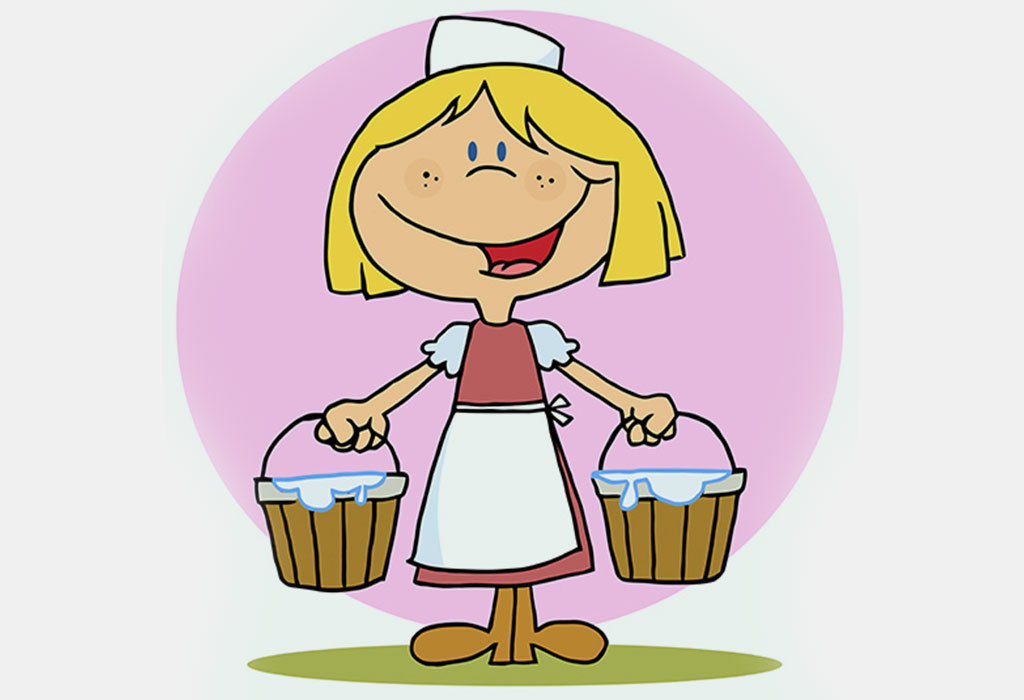
Patty, a milkmaid milked her cow and had two full pails of fresh, creamy milk. She put both pails of milk on a stick and set off to the market to sell the milk. As she took steps towards the market, her thoughts took steps towards wealth. On her way, she kept thinking about the money she would make from selling the milk. Then she thought about what she would do with that money.
She was talking to herself and said, “Once I get the money, I’ll buy a chicken. The chicken will lay eggs and I will get more chickens. They’ll all lay eggs, and I will sell them for more money. Then, I’ll buy the house on the hill and everyone will envy me.” She was very happy that soon she would be very rich. With these happy thoughts, she marched ahead. But suddenly, she tripped and fell. Both the pails of the milk fell and all her dreams were shattered. The milk spilt onto the ground, and all Patty could do was cry. “No more dream,” she cried foolishly!
Moral of the Story
Do not count your chickens before they are hatched.
Also Read: Popular Fairy Tale Stories for Kids
7. When Adversity Knocks

This is a story that explains how adversity is met differently by different people. There was a girl named Asha who lived with her mother and father in a village. One day, her father assigned her a simple task. He took three vessels filled with boiling water. He placed an egg in one vessel, a potato in the second vessel, and some tea leaves in the third vessel. He asked Asha to keep an eye on the vessels for about ten to fifteen minutes while the three ingredients in three separate vessels boiled. After the said time, he asked Asha to peel the potato and egg, and strain the tea leaves. Asha was left puzzled – she understood her father was trying to explain her something, but she didn’t know what it was.
Her father explained, “All three items were put in the same circumstances. See how they’ve responded differently.” He said that the potato turned soft, the egg turned hard, and the tea leaves changed the colour and taste of the water. He further said, “We are all like one of these items. When adversity calls, we respond exactly the way they do. Now, are you a potato, an egg, or tea leaves?”
Moral of the Story
We can choose how to respond to a difficult situation.
8. The Proud Rose

Once upon a time, there was a beautiful rose plant in a garden. One rose flower on the plant was proud of its beauty. However, it was disappointed that it was growing next to an ugly cactus. Every day, the rose would insult the cactus about its looks, but the cactus stayed quiet. All the other plants in the garden tried to stop the rose from bullying the cactus, but the rose was too swayed by its own beauty to listen to anyone.
One summer, a well in the garden dried up and there was no water for the plants. The rose slowly began to wilt. The rose saw a sparrow dip its beak into the cactus for some water. The rose then felt ashamed for having made fun of the cactus all this time. But because it was in need of water, it went to ask the cactus if it could have some water. The kind cactus agreed, and they both got through summer as friends.
Moral of the Story
Never judge someone by the way they look.
Also Read: Bible Stories for Children
9. The Tale of the Pencil

A boy named Raj was upset because he had done poorly in his English test. He was sitting in his room when his grandmother came and comforted him. His grandmother sat beside him and gave him a pencil. Raj looked at his grandma puzzled, and said he didn’t deserve a pencil after his performance in the test.
His grandma explained, “You can learn many things from this pencil because it is just like you. It experiences a painful sharpening, just the way you have experienced the pain of not doing well on your test. However, it will help you be a better student. Just as all the good that comes from the pencil is from within itself, you will also find the strength to overcome this hurdle. And finally, just as this pencil will make its mark on any surface, you too shall leave your mark on anything you choose to.” Raj was immediately consoled and promised himself that he would do better.
Moral of the Story
We all have the strength to be who we wish to be.
10. The Crystal Ball

Nasir, a small boy, found a crystal ball behind the banyan tree of his garden. The tree told him that it would grant him a wish. He was very happy and he thought hard, but unfortunately, he could not come up with anything he wanted. So, he kept the crystal ball in his bag and waited until he could decide on his wish.
Days went by without him making a wish but his best friend saw him looking at the crystal ball. He stole it from Nasir and showed it to everyone in the village. They all asked for palaces and riches and lots of gold, but could not make more than one wish. In the end, everyone was angry because no one could have everything they wanted. They became very unhappy and decided to ask Nasir for help. Nasir wished that everything would go back to how it was once – before the villagers had tried to satisfy their greed. The palaces and gold vanished and the villagers once again became happy and content.
Moral of the Story
Money and wealth do not always bring happiness.
11. A Bundle of Sticks

Once upon a time, three neighbours living in a village were having trouble with their crops. Each of the neighbours had one field, but the crops on their fields were infested with pests and were wilting. Every day, they would come up with different ideas to help their crops. The first one tried using a scarecrow in his field, the second used pesticides, and the third built a fence on his field, all to no avail.
One day, the village head came by and called the three farmers. He gave them each a stick and asked them to break it. The farmers could break them easily. He then gave them a bundle of three sticks, and again, asked them to break it. This time, the farmers struggled to break the sticks. The village head said, “Together, you are stronger and work better than you do it alone.” The farmers understood what the village head was saying. They pooled in their resources and got rid of the pests from their fields.
Moral of the Story
There is strength in unity.
12. The Ant and the Dove
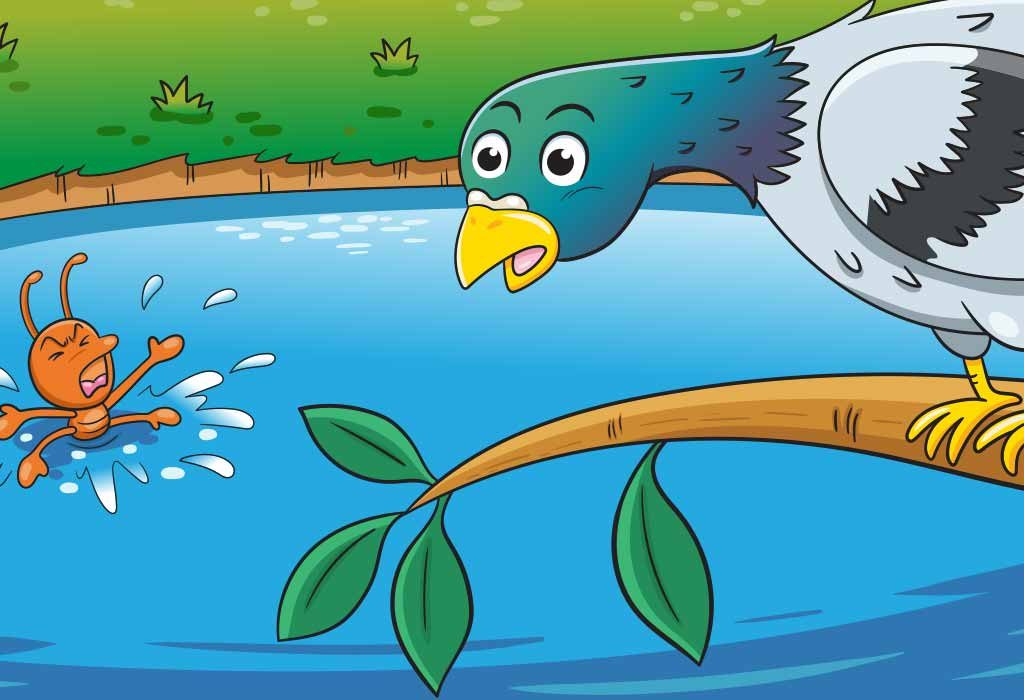
On a hot scorching day of summer, an ant was walking around in search of water. After walking around for some time, she saw a river and was delighted to see it. She climbed up on a small rock to drink the water, but she slipped and fell into the river. She was drowning but a dove who was sitting on a nearby tree helped her. Seeing the ant in trouble, the dove quickly dropped a leaf into the water. The ant moved towards the leaf and climbed up on it. The dove then carefully pulled the leaf out and placed it on the land. This way, the ant’s life was saved and she was forever indebted to the dove.
The ant and the dove became the best of friends and days passed happily. However, one day, a hunter arrived at the forest. He saw the beautiful dove sitting on the tree and aimed his gun at the dove. The ant, who was saved the dove saw this and bit on the heel of the hunter. He shouted from the pain and dropped the gun. The dove was alarmed by the voice of the hunter and realised what could have happened with him. He flew away!
Moral of the Story
A good deed never goes unrewarded.
13. The Fox and the Grapes
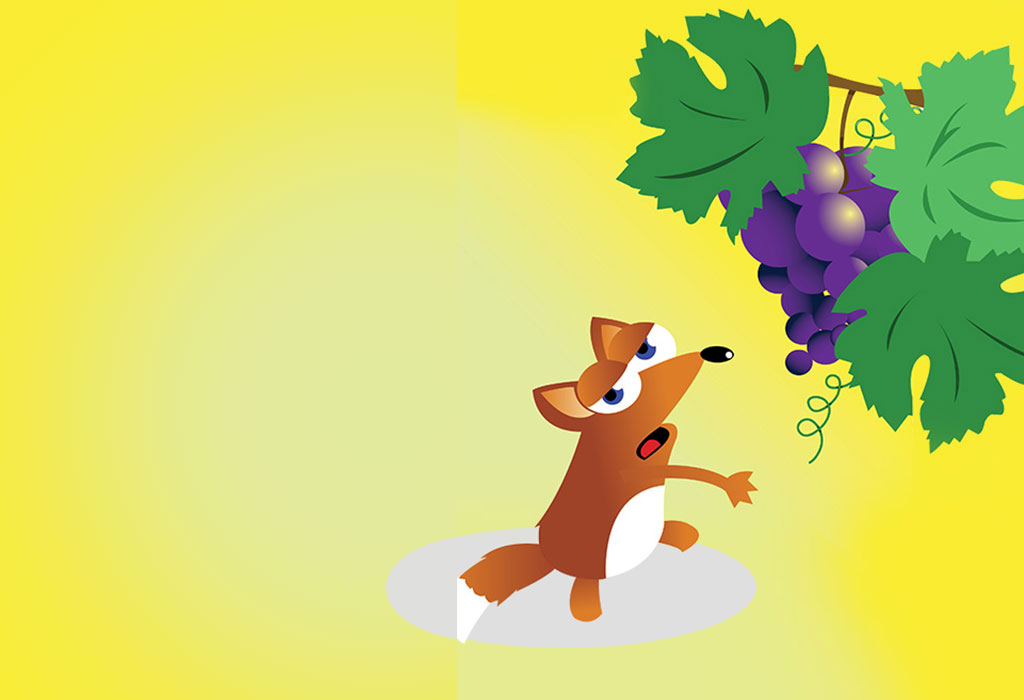
On a hot summer day, a fox wandered across the jungle in order to get some food. He was very hungry and desperately in search of food. He searched everywhere, but couldn’t find anything that he could eat. His stomach was rumbling and his search continued. Soon he reached a vineyard which was laden with juicy grapes. The fox looked around to check if he was safe from the hunters. No one was around, so he decided to steal some grapes. He jumped high and high, but he couldn’t reach the grapes. The grapes were too high but he refused to give up. The fox jumped high in the air to catch the grapes in his mouth, but he missed. He tried once more but missed again. He tried a few more times, but couldn’t reach. It was getting dark and the fox was getting angry. His legs hurt, so he gave up in the end. Walking away, he said, “I’m sure the grapes were sour anyway.”
Moral of the Story
We pretend to hate something when we can’t have it.
14. The Ant and the Grasshopper
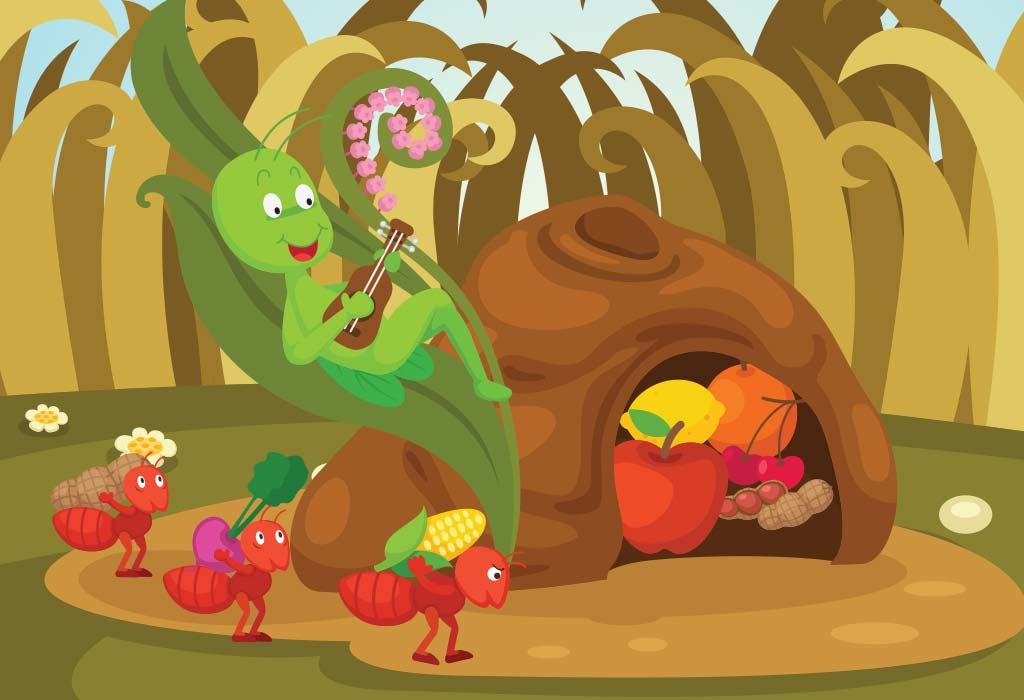
Once upon a time, there were two best friends – an ant and a grasshopper. The grasshopper liked to relax the whole day and play his guitar. The ant, however, would work hard all day. He would collect food from all corners of the garden, while the grasshopper relaxed, played his guitar, or slept. The grasshopper would tell the ant to take a break every day, but the ant would refuse and continue his work. Soon, winter came; days and nights became cold and very few creatures went out.
On a cold day of winter, a colony of ants was busy drying out some grains of corn. The half-dead grasshopper, cold and hungry, came up to the ant who was his friend and asked for a piece of corn. The ant replied, “We work day and night to collect and save up the corn so that we don’t die hungry on cold winter days. Why should we give it to you?” The ant further asked, “What were you doing last summer? You should have collected and stored some food. I told you as much before.”
The grasshopper said, “I was far too busying singing and sleeping.”
The ant replied, “You can sing all winter as far as I am concerned. You will not get anything from us.” The ant had enough food to last through the winter, without any worries at all, but the grasshopper didn’t and he realised his mistake.
Moral of the Story
Make hay while the sun shines.
15. The Bear and Two Friends
One day, two best friends were walking on a lonely and dangerous path through a jungle. As the sun began to set, they grew afraid but held on to each other. Suddenly, they saw a bear in their path. One of the boys ran to the nearest tree and climbed it in a jiffy. The other boy did not know how to climb the tree by himself, so he lay on the ground, pretending to be dead. The bear approached the boy on the ground and sniffed around his head. After appearing to whisper something in the boy’s ear, the bear went on its way. The boy on the tree climbed down and asked his friend what the bear had whispered in his ear. He replied, “Do not trust friends who do not care for you.”
Moral of the Story
A friend in need is a friend indeed.
16. Friends Forever

Once upon a time, there lived a mouse and a frog, who were the best of friends. Every morning, the frog would hop out of the pond to visit the mouse, who lived inside the hole of the tree. He would spend time with the mouse and go back home. One day, the frog realised that he was making too much of an effort to visit the mouse while the mouse never came to meet him at the pond. This made him angry, and he decided to make things right by forcefully taking him to his house.
When the mouse wasn’t looking, the frog tied a string to the mouse’s tail and tied the other end to his own leg, and hopped away. The mouse started getting dragged with him. Then, the frog jumped into the pond to swim. However, when he looked back, he saw that the mouse had started to drown and was struggling to breathe! The frog quickly untied the string from his tail and took him to the shore. Seeing the mouse with his eyes barely open made the frog very sad, and he immediately regretted pulling him into the pond.
Moral of the Story
Don’t take revenge because it can be harmful to you.
17. The Elephant and Her Friends
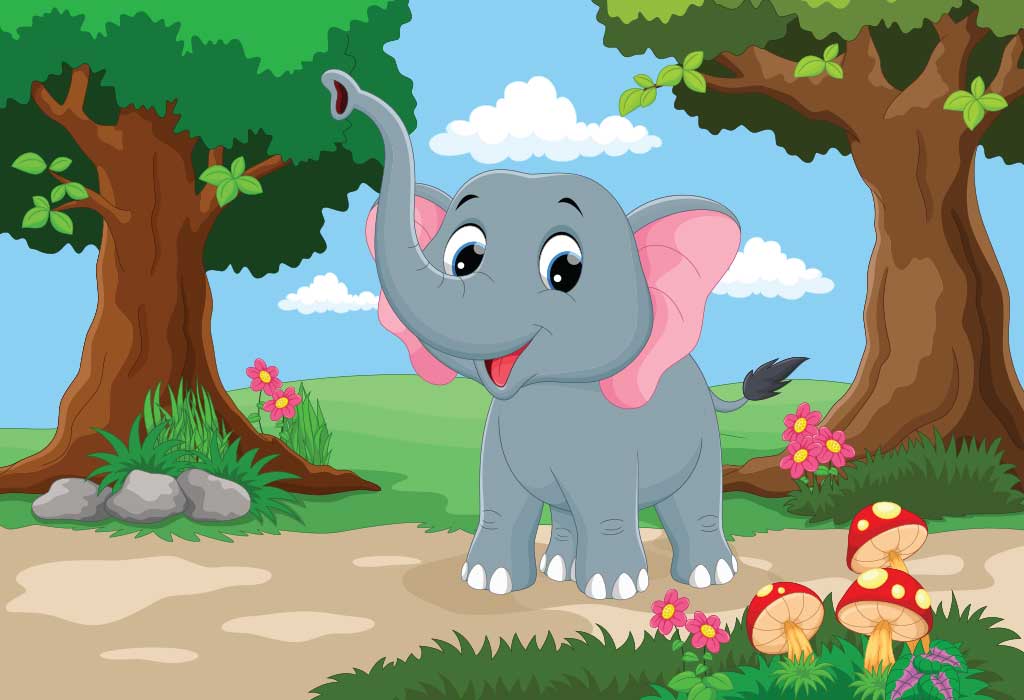
Once upon a time, a lone elephant made her way into a strange forest. It was new to her, and she was looking to make friends. She approached a monkey and said, “Hello, monkey! Would you like to be my friend?” The monkey said, “You are too big to swing like me, so I can’t be your friend.” The elephant then went to a rabbit and asked the same question. The rabbit said, “You are too big to fit in my burrow, so I can’t be your friend.” The elephant also went to the frog in the pond and asked the same question. The frog replied, “You are too heavy to jump as high as me, so I can’t be your friend.”
The elephant was really sad because she couldn’t make friends. Then, one day, she saw all the animals running deeper into the forest, and she asked a bear what the fuss was about. The bear said, “The lion is on the loose – they are running from him to save themselves.” The elephant went up to the lion and said, “Please don’t hurt these innocent people. Please leave them alone.” The lion scoffed and asked the elephant to move aside. Then, the elephant got angry and pushed the lion with all her might, injuring him. All the other animals came out slowly and started to rejoice about the lion’s defeat. They went to the elephant and said to her, “You are just the right size to be our friend!”
Moral of the Story
A person’s size does not determine their worth.
18. The Woodcutter and the Golden Axe
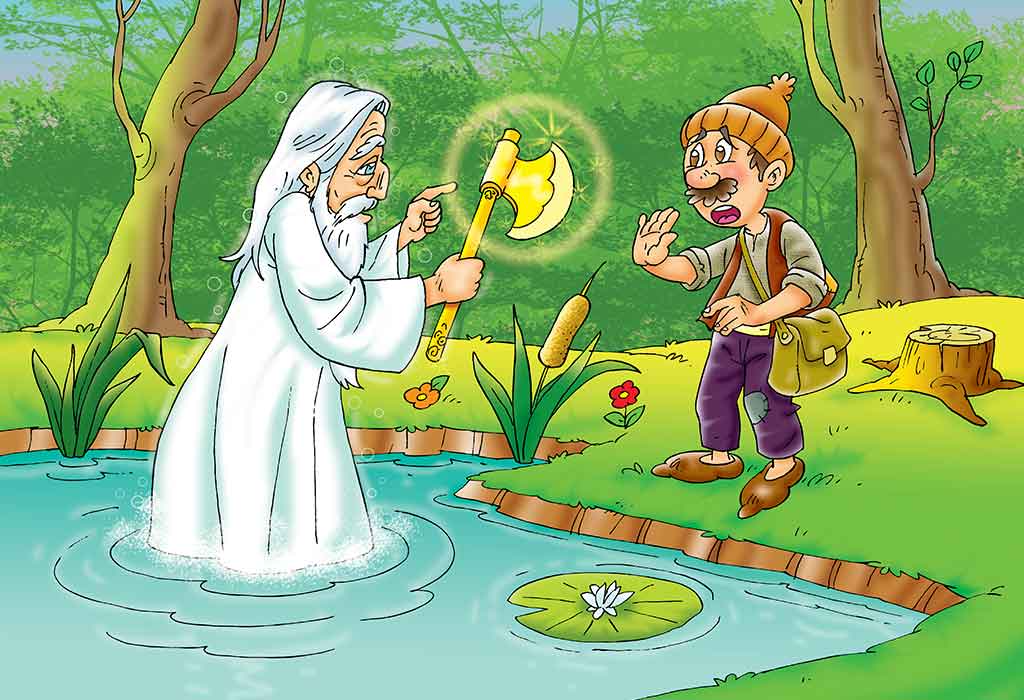
There was once a woodcutter, working hard in the forest, getting wood to sell for some food. As he was cutting a tree, his axe accidentally fell into the river. The river was deep and was flowing really fast – he lost his axe and could not find it again. He sat at the bank of the river and wept.
While he wept, the God of the river arose and asked him what happened. The woodcutter told him the story. The God of the river offered to help him by looking for his axe. He disappeared into the river and retrieved a golden axe, but the woodcutter said it was not his. He disappeared again and came back with a silver axe, but the woodcutter said that was not his either. The God disappeared into the water again and came back with an iron axe – the woodcutter smiled and said it was his. The God was impressed with the woodcutter’s honesty and gifted him both the golden and silver axes.
Moral of the Story
Honesty is the best policy.
19. The Needle Tree

There lived two brothers near a forest. The elder one was very mean to the younger brother – he would finish all the food and wear all the new clothes of his younger brother. One day, the elder brother decided to go into the forest to get some firewood and sell it in the market. As he went around, chopping tree after tree, he stumbled upon a magical tree. The tree said, “Oh kind sir, please do not cut my branches. If you spare me, I will give you golden apples.” He agreed, but was left disappointed with the number of apples the tree gave him. As greed overcame him, he threatened the tree that he will cut the entire trunk if it didn’t give him more apples. The magical tree, instead, showered upon the elder brother, hundreds and hundreds of tiny needles. The elder brother lay on the ground, crying in pain, as the sun set.
The younger brother was worried and so he went in search of his elder brother. He found him lying in pain near the tree, with hundreds of needles on his body. He rushed to his brother and removed each needle, lovingly and gently. After he finished, the elder brother apologised for treating him badly and promised to be better. The tree saw the change in the elder brother’s heart and gave them all the golden apples they would ever need.
Moral of the Story
It is important to be kind and gracious, as it will always be rewarded.
20. The Greedy Lion

On a hot day, a lion in the forest started feeling hungry. He was starting to hunt for his food when he found a hare roaming around alone. Instead of catching the hare, the lion let it go – “A small hare such as this can’t satisfy my hunger”, he said and scoffed. Then, a beautiful deer passed by and he decided to take his chances – he ran and ran behind the deer but since he was weak because of the hunger, he struggled to keep up with the deer’s speed. Tired and defeated, the lion went back to look for the hare to fill up his stomach for the time being, but it was gone. The lion was sad and remained hungry for a long time.
Moral of the Story
Greed is never a good thing.
Tips on Making Storytime Interesting for Your Kids
No matter how good or engaging a story may be, the way you recite it to your kids will make all the difference. If you want to make story sessions fun (and less preachy) for your kids, here are some tips on how to narrate stories.
- Be creative while you read the story to your child. Usually, a personality or character of the story catches a child’s interest the most. So use different voices for each character or act out various parts from the story, to bring life to those characters. Acting out parts from the story will make story sessions fun and memorable for your kids.
- If you are using books or pictures, lay them in front of your kids. You can ask them to turn the pages or trace the words as you read.
- Talk about the story after you’ve finished reciting it. Ask your children questions along the way and discuss the moral of the story in the end. This way, you will also know if your children understood what happened in the story. Asking questions from time to time will keep children engaged plus it will promote speech development in kids. You can also point out new words in the story and tell their meanings to your kids – this will develop their vocabulary.
- Read aloud together with your kids. Ask your child to read with you. This will encourage reading habit in your child and also improve his reading skills.
- Take stories outdoors. You don’t have to sit on bed with your kids while narrating a story to them – you can take the story beyond the four walls of your home. For instance, if you are reading a story on ‘fun in the park’, take your child to an amusement park, lay a blanket under the tree in that park, and read the story there. This will make the story more life-like and your kid will enjoy it even more.
- Try reading stories at different times of the day. Storytime need not be bedtime always. Try reading stories to your kids at different times of the day like in the afternoon or evening to understand your child’s attention span. Once you know the time when your child’s attention span is the highest, read stories to him during that time.
Make storytime fun and exciting with the above tips. These tips will help you leave an impact on your kids and make storytime the favourite part of their day. Also, read the above short moral stories to your kids – we are sure they will enjoy listening to these stories. Furthermore, these short stories with moral values will even teach your children some important lessons which they will remember always.
----------------------------------------------------------------------------------------------------------------------------------------------------------------------------------------
moral stories for kids in hindi....
बच्चों के लिए शीर्ष 20 लघु नैतिक कहानियाँ
आरोही अचवाल द्वारा -21 दिसंबर, 2019 51 लाइक 3 टिप्पणी 96808
बच्चों के लिए लघु नैतिक कहानियाँ अंग्रेजी में
इस लेख में
वीडियो: बच्चों के लिए लघु नैतिक कहानियां - भाग 1
अपने बच्चों के लिए मजेदार और मनोरंजक लघु कथाएँ
अपने बच्चों के लिए कहानी को रोचक बनाने के टिप्स
अंतिम अपडेट 3 जनवरी, 2020 को
एक समय था जब बच्चों के लिए केवल मनोरंजन के साधन थे। एक या दो दशक पहले, बच्चों ने अपना समय कहानियों को पढ़ने और कहानियों से अपने पसंदीदा पात्रों की भूमिका निभाने में बिताया। हालाँकि, अब समय बदल गया है - इंटरनेट के युग में, बच्चे अपना अधिकांश समय स्मार्टफोन पर गेम खेलने या YouTube पर कार्टून या वीडियो देखने में बिताते हैं।
विज्ञापन
लेकिन अगर आप चाहते हैं कि आपके बच्चे स्क्रीन से ब्रेक लें और अपने बचपन का अनुभव करें, तो आप उन्हें लघु कथाएँ पढ़ा सकते हैं। अपने बच्चों को कहानियां सुनाकर, आप उन्हें ज्ञान प्रदान करेंगे और उनके साथ बहुत जरूरी समय बिताएंगे। हमारे पास नैतिक मूल्यों के साथ कुछ लोकप्रिय लघु कहानियों का संग्रह है जो आप अपने बच्चों को पढ़ सकते हैं।
Also Read: नैतिक पाठ के साथ बच्चों के लिए महाभारत की लघु कथाएँ
वीडियो: बच्चों के लिए लघु नैतिक कहानियां - भाग 1
अपने बच्चों के लिए मजेदार और मनोरंजक लघु कथाएँ
यदि आप जल्दी से अपने बच्चों में अच्छी आदतों का पालन करना चाहते हैं और उन्हें अच्छे व्यक्ति बनने के लिए बड़े होते देखना चाहते हैं, तो उन्हें नैतिक कहानियाँ पढ़ें। यहां 20 बच्चों की कहानियां नैतिक मूल्यों के साथ हैं जिन्हें आप अपने बच्चों को पढ़ा सकते हैं!
विज्ञापन
1. शेर और माउस
शेर और माउस की कहानी
एक शेर एक बार जंगल में सो रहा था जब एक चूहे ने मस्ती के लिए उसके शरीर को ऊपर-नीचे करना शुरू कर दिया। इससे शेर की नींद खराब हो गई, और वह काफी गुस्से में उठा। वह चूहे को खाने वाला था जब चूहे ने उसे मुक्त करने के लिए शेर से सख्त अनुरोध किया। "मैं तुमसे वादा करता हूं, अगर तुम मुझे बचाओगे तो मैं किसी दिन तुम्हारी बहुत मदद करूंगा।" शेर चूहे के आत्मविश्वास पर हंस पड़ा और उसे जाने दिया।
एक दिन, कुछ शिकारी जंगल में आए और शेर को अपने साथ ले गए। उन्होंने उसे एक पेड़ से बांध दिया। शेर बाहर निकलने के लिए संघर्ष कर रहा था और फुसफुसाहट करने लगा। जल्द ही, चूहा अतीत में चला गया और शेर को परेशानी में देखा। जल्दी से, वह भागा और शेर को मुक्त करने के लिए रस्सियों पर चढ़ गया। दोनों जंगल में भाग गए।
कहानी का नैतिक
दयालुता का एक छोटा कार्य एक लंबा रास्ता तय कर सकता है।
Also Read: बच्चों के लिए भगवान कृष्ण की बचपन की कहानियाँ
2. बुद्धिमानी से गिनें
बुद्धिमानी से गिनती कहानी
एक दिन, राजा अकबर ने अपने दरबार में एक सवाल पूछा, जिसने सभी को कठघरे में खड़ा कर दिया। जैसा कि वे सभी ने जवाब जानने की कोशिश की, बीरबल ने अंदर जाकर पूछा कि मामला क्या है। उन्होंने उनसे सवाल दोहराया।
विज्ञापन
सवाल था, "शहर में कुल कितने कौवे हैं?"
बीरबल तुरंत मुस्कुराए और अकबर के पास गए। उसने उत्तर की घोषणा की; उन्होंने कहा कि शहर में इक्कीस हजार, पांच सौ और तेईस कौवे थे। जब उनसे पूछा गया कि उन्हें जवाब कैसे पता है, तो बीरबल ने जवाब दिया, "अपने लोगों से कौवे की संख्या गिनने के लिए कहें। यदि वहाँ अधिक हैं, तो कौवे के रिश्तेदार उन्हें पास के शहरों से देखने आ रहे हैं। यदि कम हैं, तो हमारे शहर के कौवे अपने रिश्तेदारों से मिलने जरूर जाते हैं जो शहर से बाहर रहते हैं। ” जवाब से प्रसन्न होकर अकबर ने बीरबल को माणिक और मोती की चेन भेंट की।
विज्ञापन
कहानी का नैतिक
आपके उत्तर के लिए स्पष्टीकरण होना उतना ही महत्वपूर्ण है जितना कि एक उत्तर होना।
Also Read: बच्चों के लिए आकर्षक रामायण कहानियां
विज्ञापन
3. वो लड़का जो रोया हुआ भेड़िया था
द बॉय हू क्राय वुल्फ कहानी
एक गाँव में, अपने पिता के साथ एक लापरवाह लड़का रहता था। लड़के के पिता ने उसे बताया कि वह खेतों में चरने के दौरान भेड़ों को देखने के लिए काफी बूढ़ा हो गया था। हर दिन, उसे भेड़ों को घास वाले खेतों में ले जाना और उन्हें चरते हुए देखना था। हालांकि, लड़का नाखुश था और भेड़ को खेतों में नहीं ले जाना चाहता था। वह दौड़ना और खेलना चाहता था, मैदान में उबाऊ भेड़ चरना नहीं देखता था। इसलिए, उन्होंने कुछ मजेदार करने का फैसला किया। वह रोया, "भेड़िया! भेड़िया!" जब तक भेड़ों को खाने से पहले पूरा गांव पत्थरों का पीछा करने के लिए पत्थरों से दौड़ता हुआ आता था। जब ग्रामीणों ने देखा कि कोई भेड़िया नहीं है, तो उन्होंने अपनी सांसों के माध्यम से यह कहना छोड़ दिया कि लड़के ने अपना समय कैसे बर्बाद किया है। अगले दिन, लड़का एक बार फिर रोया, “भेड़िया! भेड़िया!" और, फिर से, ग्रामीणों ने भेड़िये का पीछा करने के लिए वहाँ दौड़ लगाई।
वह लड़का उस डर से हँसा जो उसने किया था। इस बार, ग्रामीण गुस्से में चले गए। तीसरे दिन, जब वह लड़का छोटी पहाड़ी पर गया, तो उसने अचानक एक भेड़िये को अपनी भेड़ों पर हमला करते देखा। वह जितना मुश्किल हो सकता था रोया, "भेड़िया! भेड़िया! वुल्फ! ”, लेकिन एक भी ग्रामीण उसकी मदद के लिए नहीं आया। ग्रामीणों ने सोचा कि वह उन्हें फिर से बेवकूफ बनाने की कोशिश कर रहा है और उसे या उसकी भेड़ों को बचाने नहीं आया। छोटे लड़के ने उस दिन कई भेड़ों को खो दिया, सब उसकी मूर्खता के कारण।
विज्ञापन
कहानी का नैतिक
झूठ बोलने वाले लोगों पर भरोसा करना मुश्किल है, इसलिए हमेशा सच होना महत्वपूर्ण है।
4. लोमड़ी और सारस
लोमड़ी और सारस की कहानी
एक दिन, एक स्वार्थी लोमड़ी ने रात के खाने के लिए एक सारस को आमंत्रित किया। सारस निमंत्रण से बहुत खुश था - वह समय पर लोमड़ी के घर पहुंचा और अपनी लंबी चोंच के साथ दरवाजे पर दस्तक दी। लोमड़ी उसे खाने की मेज पर ले गई और उन दोनों के लिए छिछले कटोरे में कुछ सूप परोसा। चूंकि सारस के लिए कटोरी बहुत उथली थी, इसलिए उसके पास सूप नहीं था। लेकिन, लोमड़ी ने उसका सूप जल्दी से चाट लिया।
सारस नाराज़ और परेशान था, लेकिन उसने अपना गुस्सा नहीं दिखाया और विनम्रता से व्यवहार किया। लोमड़ी को सबक सिखाने के लिए, उसने फिर उसे अगले दिन रात के खाने के लिए आमंत्रित किया। उसने सूप भी परोसा, लेकिन इस बार सूप को दो लंबी संकीर्ण गैसों में परोसा गया। सारस ने उसके फूलदान में से सूप निकाला, लेकिन लोमड़ी ने अपनी संकीर्ण गर्दन के कारण उसे नहीं पीया। लोमड़ी को अपनी गलती का एहसास हुआ और वह अकालग्रस्त हो गई।
कहानी का नैतिक
एक स्वार्थी कार्य जल्दी या बाद में पीछे हट जाता है!
Also Read: बच्चों के लिए भारतीय पौराणिक कहानियां
5. द गोल्डन टच
द गोल्डन टच की कहानी
एक बार एक छोटे शहर में एक लालची आदमी रहता था। वह बहुत अमीर था, और वह सोने और सभी चीजों को पसंद करता था। लेकिन वह अपनी बेटी को किसी भी चीज से ज्यादा प्यार करता था। एक दिन, उसने एक परी पर जप किया। परी के बाल कुछ पेड़ों की शाखाओं में फंस गए थे। उसने उसकी मदद की, लेकिन जैसे-जैसे उसका लालच खत्म होता गया, उसने महसूस किया कि उसे बदले में (उसकी मदद करके) इच्छा पूछकर अमीर बनने का मौका मिला। परी ने उसे एक इच्छा दी। उन्होंने कहा, "मैं जो कुछ भी छूता हूं उसे सोने की ओर मुड़ना चाहिए।" और उसकी इच्छा आभारी परी ने दी।
0: 00/0: 00
5 में छोड़ें
लालची व्यक्ति अपनी पत्नी और बेटी को अपनी इच्छा के बारे में बताने के लिए घर से भाग गया, सभी पत्थर और कंकड़ को छूते हुए और उन्हें सोने में परिवर्तित होते हुए देखा। एक बार जब वह घर गया, तो उसकी बेटी उसे बधाई देने के लिए दौड़ी। जैसे ही वह उसे अपनी बाहों में फँसाने के लिए नीचे झुका, वह एक सोने की मूर्ति में बदल गया। वह तबाह हो गया और रोने लगा और अपनी बेटी को वापस लाने की कोशिश कर रहा था। उसने अपनी मूर्खता का एहसास किया और अपने बाकी दिनों को परी को खोजने के लिए उसकी इच्छा को दूर करने में बिताया।
कहानी का नैतिक
लालच हमेशा पतन की ओर ले जाएगा।
6. द मिल्कमिड एंड हर पेल
द मिल्कमिड एंड हर पेल कहानी
पैटी, एक मिल्कमेड ने अपनी गाय को दूध पिलाया और उसके पास ताजे, मलाईदार दूध के दो पूर्ण टुकड़े थे। उसने दूध की दोनों पुड़िया छड़ी पर रखी और दूध बेचने के लिए बाजार की ओर निकल पड़ा। जैसे-जैसे उसने बाज़ार की ओर कदम बढ़ाया, उसके विचारों ने धन की ओर कदम बढ़ाया। उसके रास्ते में, वह दूध बेचने से होने वाले पैसे के बारे में सोचती रही। फिर उसने सोचा कि वह उस पैसे का क्या करेगी।
वह खुद से बात कर रही थी और कहा, “एक बार जब मुझे पैसा मिल जाएगा, तो मैं एक चिकन खरीदूंगी। मुर्गी अंडे देगी और मुझे और मुर्गियां मिलेंगी। वे सभी अंडे देंगे, और मैं उन्हें और पैसे बेचूंगा। फिर, मैं पहाड़ी पर घर खरीदूंगा और हर कोई मुझसे ईर्ष्या करेगा। ” वह बहुत खुश थी कि जल्द ही वह बहुत अमीर हो जाएगी। इन खुश विचारों के साथ, वह आगे बढ़ गई। लेकिन अचानक, वह फंस गई और गिर गई। दूध के दोनों पेले गिर गए और उसके सारे सपने चकनाचूर हो गए। दूध जमीन पर गिरा, और सभी पैटी रो सकते थे। "कोई और सपना नहीं," वह मूर्खता से रोया!
कहानी का नैतिक
अपने मुर्गियों की गिनती करने से पहले उन्हें मत गिनो।
Also Read: बच्चों के लिए लोकप्रिय परी कथाएँ
7. जब प्रतिकूलता दस्तक देती है
जब एडवर्सिटी नॉक स्टोरी
यह एक कहानी है जो बताती है कि विभिन्न लोगों द्वारा प्रतिकूल परिस्थितियों को कैसे पूरा किया जाता है। आशा नाम की एक लड़की थी जो एक गाँव में अपनी माँ और पिता के साथ रहती थी। एक दिन, उसके पिता ने उसे एक साधारण काम सौंपा। वह उबलते पानी से भरे तीन बर्तन ले गया। उसने एक बर्तन में एक अंडा, दूसरे बर्तन में एक आलू और तीसरे बर्तन में कुछ चाय की पत्ती रखी। उन्होंने आशा को लगभग दस से पंद्रह मिनट तक जहाजों पर नज़र रखने के लिए कहा, जबकि तीन अलग-अलग जहाजों में तीन सामग्री उबला हुआ था। उक्त समय के बाद, उन्होंने आशा को आलू और अंडे को छीलने और चाय की पत्तियों को छीलने के लिए कहा। आशा हैरान रह गई - उसने समझा कि उसके पिता उसे कुछ समझाने की कोशिश कर रहे हैं, लेकिन वह नहीं जानती थी कि यह क्या था।
उसके पिता ने समझाया, “तीनों वस्तुओं को एक ही परिस्थिति में रखा गया था। देखें कि उन्होंने अलग तरीके से कैसे प्रतिक्रिया दी है। ” उन्होंने कहा कि आलू नरम हो गया, अंडा सख्त हो गया और चाय की पत्तियों ने पानी का रंग और स्वाद बदल दिया। उन्होंने आगे कहा, “हम सभी इनमें से एक आइटम की तरह हैं। जब विपत्ति आती है, तो हम ठीक उसी तरह जवाब देते हैं जैसे वे करते हैं। अब, क्या आप एक आलू, एक अंडा या चाय की पत्ती हैं? ”
कहानी का नैतिक
हम चुन सकते हैं कि किसी कठिन परिस्थिति का जवाब कैसे दिया जाए।
8. प्राउड रोज़
द प्राउड रोज़ की कहानी
एक बार की बात है, एक बगीचे में एक सुंदर गुलाब का पौधा था। पौधे पर एक गुलाब का फूल अपनी सुंदरता पर गर्व कर रहा था। हालांकि, यह निराश था कि यह एक बदसूरत कैक्टस के बगल में बढ़ रहा था। हर दिन, गुलाब अपने लुक के बारे में कैक्टस का अपमान करता था, लेकिन कैक्टस चुप रहा। बगीचे के अन्य सभी पौधों ने गुलाब को कैक्टस को धमकाने से रोकने की कोशिश की, लेकिन किसी को सुनने के लिए गुलाब को अपनी सुंदरता से बहाना पड़ा।
एक गर्मियों में, बगीचे में एक कुआं सूख गया और पौधों के लिए पानी नहीं था। गुलाब धीरे-धीरे विलीन होने लगा। गुलाब ने एक गौरैया को अपनी चोंच डुबोते देखा
एक गर्मियों में, बगीचे में एक कुआं सूख गया और पौधों के लिए पानी नहीं था। गुलाब धीरे-धीरे विलीन होने लगा। गुलाब ने देखा कि कुछ पानी के लिए एक गौरैया अपनी चोंच को कैक्टस में डुबोती है। गुलाब को इस बार कैक्टस का मजाक बनाने के लिए शर्म महसूस हुई। लेकिन क्योंकि यह पानी की जरूरत थी, यह कैक्टस से पूछने के लिए गया कि क्या यह कुछ पानी हो सकता है। जिस तरह का कैक्टस सहमत था, और वे दोनों गर्मियों में दोस्तों के रूप में मिले।
कहानी का नैतिक
कभी भी किसी को उनके देखने के तरीके से न आंकें।
Also Read: बच्चों के लिए बाइबिल की कहानियां
9. पेंसिल की कथा
द टेल ऑफ़ द पेंसिल कहानी
राज नाम का एक लड़का परेशान था क्योंकि उसने अपने अंग्रेजी की परीक्षा में खराब प्रदर्शन किया था। वह अपने कमरे में बैठे थे जब उनकी दादी ने आकर उन्हें सांत्वना दी। उसकी दादी उसके पास बैठी और उसे एक पेंसिल दी। राज ने अपनी दादी की ओर देखा, और कहा कि वह परीक्षण में अपने प्रदर्शन के बाद एक पेंसिल के लायक नहीं है।
उनकी दादी ने समझाया, "आप इस पेंसिल से कई चीजें सीख सकते हैं क्योंकि यह आपकी तरह है। यह एक दर्दनाक तीक्ष्णता का अनुभव करता है, जिस तरह से आपने अपने परीक्षण पर अच्छा नहीं करने के दर्द का अनुभव किया है। हालांकि, यह आपको एक बेहतर छात्र बनने में मदद करेगा। जिस तरह पेंसिल से आने वाली सभी अच्छाइयाँ अपने भीतर से होती हैं, उसी तरह आप भी इस बाधा को दूर करने की ताकत पाएंगे। और अंत में, जैसे ही यह पेंसिल किसी भी सतह पर अपनी छाप छोड़ेगी, आप भी अपना निशान छोड़ देंगे। राज को तुरंत सांत्वना दी गई और उन्होंने खुद से वादा किया कि वह बेहतर काम करेंगे।
कहानी का नैतिक
हम सभी में वह शक्ति है जो हम होना चाहते हैं।
10. द क्रिस्टल बॉल
द क्रिस्टल बॉल की कहानी
एक छोटे लड़के नासिर को अपने बगीचे के बरगद के पेड़ के पीछे एक क्रिस्टल बॉल मिली। पेड़ ने उससे कहा कि वह उसे एक इच्छा देगा। वह बहुत खुश था और उसने कड़ी मेहनत की, लेकिन दुर्भाग्य से, वह अपनी इच्छा से कुछ भी नहीं कर सका। इसलिए, उन्होंने क्रिस्टल बॉल को अपने बैग में रखा और तब तक इंतजार किया, जब तक वह अपनी इच्छा के बारे में फैसला नहीं कर लेता।
उसके बिना इच्छा किए दिन बीत गए लेकिन उसके सबसे अच्छे दोस्त ने उसे क्रिस्टल बॉल को देखते हुए देखा। उसने इसे नासिर से चुराया और गाँव के सभी लोगों को दिखाया। उन सभी ने महलों और धन और बहुत सारे सोने के लिए कहा, लेकिन एक से अधिक इच्छा नहीं कर सके। अंत में, हर कोई गुस्से में था क्योंकि कोई भी वह सब कुछ नहीं कर सकता था जो वे चाहते थे। वे बहुत दुखी हुए और नासिर से मदद मांगने का फैसला किया। नसीर की इच्छा थी कि सबकुछ एक बार फिर से हो जाए। महल और सोना गायब हो गए और ग्रामीण एक बार फिर खुश और संतुष्ट हो गए।
कहानी का नैतिक
धन और दौलत हमेशा खुशियां नहीं लाते।
11. लाठी का एक बंडल
लाठी कहानी का बंडल
एक बार की बात है, एक गाँव में रहने वाले तीन पड़ोसी अपनी फसलों को लेकर परेशान थे। पड़ोसियों में से प्रत्येक के पास एक खेत था, लेकिन उनके खेतों में फसल कीटों से पीड़ित थी और विलेपन कर रही थी। हर दिन, वे अपनी फसलों की मदद करने के लिए विभिन्न विचारों के साथ आते थे। पहले व्यक्ति ने अपने क्षेत्र में एक बिजूका का उपयोग करने की कोशिश की, दूसरे ने कीटनाशकों का इस्तेमाल किया, और तीसरे ने अपने क्षेत्र पर एक बाड़ बनाया, जिसका कोई फायदा नहीं हुआ।
एक दिन ग्राम प्रधान ने आकर तीनों किसानों को बुलाया। उसने उन्हें प्रत्येक छड़ी दी और उन्हें इसे तोड़ने के लिए कहा। किसान उन्हें आसानी से तोड़ सकते थे। फिर उसने उन्हें तीन छड़ियों का एक बंडल दिया, और फिर, उन्हें इसे तोड़ने के लिए कहा। इस बार, किसानों ने लाठी तोड़ने के लिए संघर्ष किया। ग्राम प्रधान ने कहा, "एक साथ, आप मजबूत होते हैं और बेहतर काम करते हैं। किसान समझ गए कि ग्राम प्रधान क्या कह रहा है। वे अपने संसाधनों में जुट गए और अपने खेतों से कीटों से छुटकारा पा लिया।
कहानी का नैतिक
एकता में ताकत है।
12. चींटी और कबूतर
चींटी और कबूतर
गर्मी के एक गर्म झुलसा वाले दिन, एक चींटी पानी की तलाश में इधर-उधर घूम रही थी। कुछ देर इधर-उधर घूमने के बाद, उसने एक नदी देखी और उसे देखकर बहुत खुश हुई। वह पानी पीने के लिए एक छोटी चट्टान पर चढ़ गया, लेकिन वह फिसल गया और नदी में गिर गया। वह डूब रही थी लेकिन पास के पेड़ पर बैठे एक कबूतर ने उसकी मदद की। चींटी को मुसीबत में देखकर, कबूतर ने जल्दी से पानी में एक पत्ता गिरा दिया। चींटी पत्ती की ओर बढ़ी और उस पर चढ़ गई। कबूतर ने सावधानी से पत्ती को बाहर निकाला और उसे जमीन पर रख दिया। इस तरह, चींटी की जान बच गई और वह हमेशा के लिए कबूतर की ऋणी हो गई।
चींटी और कबूतर सबसे अच्छे दोस्त बन गए और दिन खुशी से बीतने लगे। हालांकि, एक दिन, एक शिकारी जंगल में पहुंचा। उसने देखा कि सुंदर कबूतर पेड़ पर बैठा है और उसने कबूतर पर अपनी बंदूक का निशाना लगाया। चींटी, जिसे कबूतर ने बचाया था, उसने शिकारी की एड़ी पर यह और बिट देखा। वह दर्द से चिल्लाया और बंदूक गिरा दी। कबूतर शिकारी की आवाज से घबरा गया और महसूस किया कि उसके साथ क्या हो सकता है। वह उड़ गया!
कहानी का नैतिक
एक अच्छा काम कभी भी बिना रुके चलता है।
13. लोमड़ी और अंगूर
फॉक्स और अंगूर कहानी
एक गर्म गर्मी के दिन, एक लोमड़ी कुछ खाना पाने के लिए जंगल में भटकती थी। वह भोजन की तलाश में बहुत भूखा और हताश था। उसने हर जगह खोज की, लेकिन ऐसा कुछ भी नहीं पाया जो वह खा सके। उसका सेंट
-------------------------------------------------------------------------------------------------------------------------------------------------------------------------------------------------------------------------------
ReplyDeletemoral stories for kids in hindi Yt
Nice information moral stories in hindi
ReplyDeleteYou have done a great job on this article. It’s very readable and highly intelligent.
ReplyDeleteYou have even managed to make it understandable and easy to read. You have some real writing talent. Thank you
amazon quiz
gk quiz
general knowledge quiz
english stories
bedtime stories
short stories kids
english short stories
short bedtime stories